


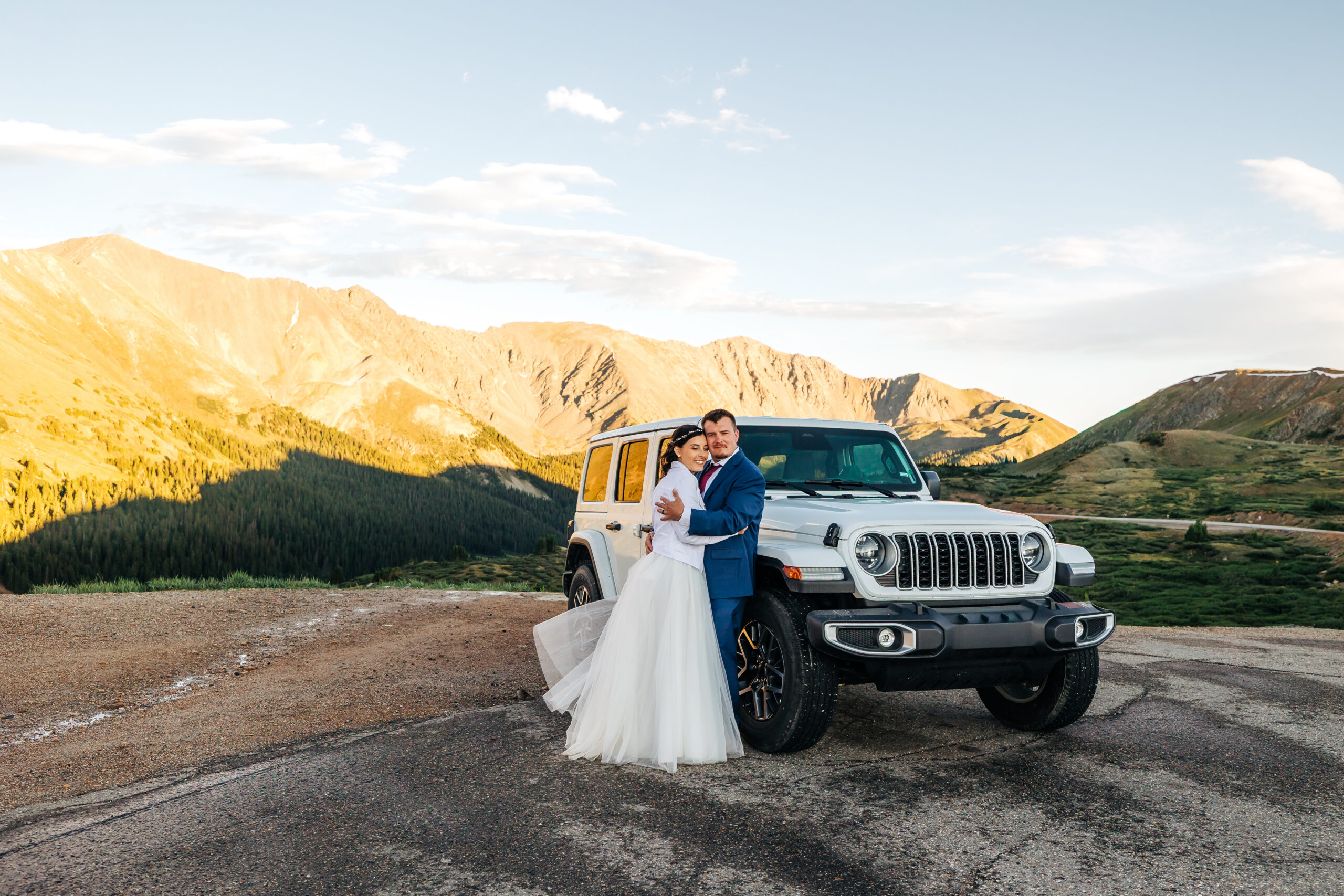
Off-Roading Elopements in Colorado: The Complete Guide to Planning a Badass—and Safe—Jeep Elopement
Off-roading on your elopement day sounds pretty badass. Honestly? It can be.
You can reach places most people will never see, trade crowded overlooks for rugged alpine basins, and get enormous Colorado views without hiking for four hours in wedding clothes. The drive is not just dead time between photo locations—it becomes one of the stories you will tell about your wedding day.
But let me give you the honest version before you start searching for a white Jeep because it is a total vibe.
An off-roading elopement is not as simple as renting any vehicle with four-wheel drive and heading into the mountains. The roads can be slow, rough, exposed, dusty, muddy, weather-dependent, and completely out of cell range. Your hair may get messy. Your dress will probably get dirty. You may have to pee outside. A road that is only eight miles long can take more than an hour.
And, yes, I still think it can be one of the coolest ways to experience Colorado on your elopement day.
The key is choosing an experience that genuinely fits the two of you—not forcing yourselves through a terrifying drive just because the view looked good on Instagram. Adventure is personal. It does not have to mean the hardest trail, the highest elevation, or the most extreme thing you can survive. It should feel exciting, meaningful, and like something you would actually enjoy doing together.
That is what this guide will help you figure out.
What Is an Off-Roading Elopement?
An off-roading elopement uses a Jeep, 4Runner, Bronco, or another properly equipped high-clearance vehicle to access one or more locations by unpaved mountain roads or designated four-wheel-drive trails.
Sometimes that means a relatively mellow dirt route through wildflowers and aspen groves. Sometimes it means a narrow, rocky shelf road climbing high into the San Juan Mountains. There is a massive range between those two experiences, and you do not earn extra elopement points for choosing the scariest one.
Depending on the day, you might:
- Ride with me in my cherry-red Jeep.
- Hire a professional Jeep tour company and driver.
- Rent an off-road-capable vehicle and drive yourselves.
- Use a combination—adventure alone first, then meet your family at a more accessible ceremony location.
The right option depends on your driving experience, comfort with heights, guest count, desired privacy, budget, trail difficulty, and how much of the drive you want photographed.
Why Choose Off-Roading for Your Colorado Elopement?
You can reach more remote locations
Colorado has incredible drive-up scenery, but popular overlooks can be busy—especially during peak summer and fall weekends. Traveling farther on a designated backcountry road can open up alpine lakes, mining-country views, wildflower-covered basins, aspen groves, and rugged ridgelines that most visitors never experience.
More remote does not mean guaranteed private. You may still see other Jeeps, ATVs, tour vehicles, hikers, or photographers. But it usually gives us far more room to explore and find a quieter place for vows or portraits.
You can get huge views without a huge hike
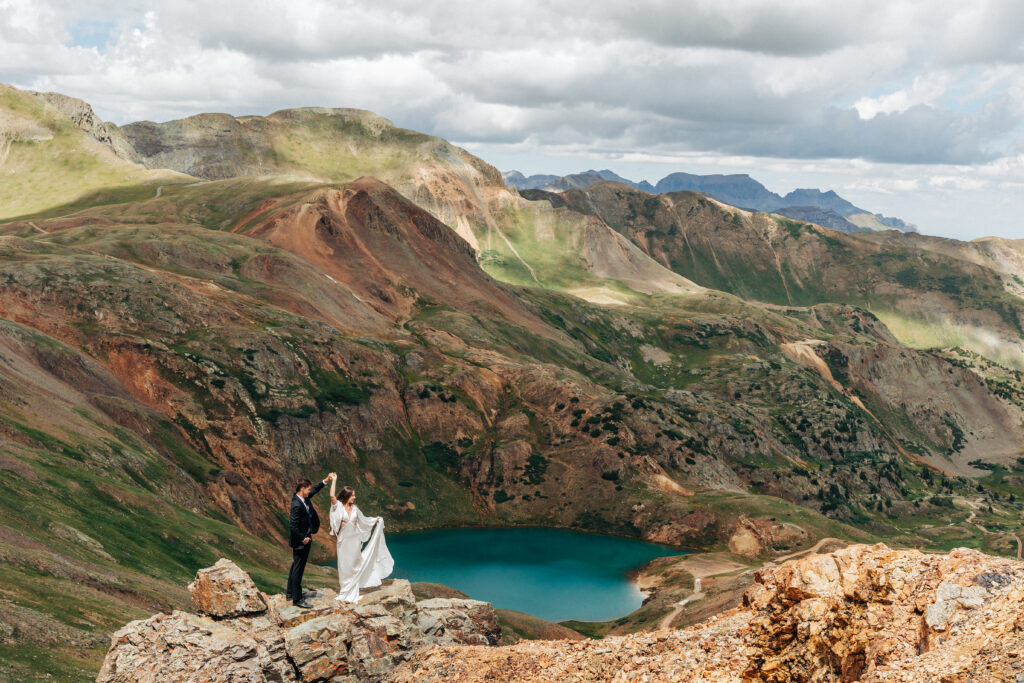
Not every adventurous couple wants to hike three or four miles on their wedding day. Maybe you do not enjoy hiking. Maybe altitude is a concern. Maybe you want to include family, bring your dogs, save your energy for the rest of the day, or simply experience the mountains differently.
We may still wander up a hill or explore around a stop, but off-roading can make dramatic scenery accessible without turning the day into an endurance event.
This matters because adventure is not measured in miles. An intentional day with a Jeep ride, private vows, a picnic, dogs, family, coffee, pizza, or beer can be every bit as adventurous as summiting something before sunrise.
The drive becomes part of the wedding day
One of my favorite things about exploring with my husband and son is that the drive itself becomes the activity. We discover new roads, watch for wildlife, pull over for a view, and eat lunch somewhere beautiful.
Your elopement can feel the same way. You are not just tolerating transportation to reach a photo spot. You are laughing through the bumps, watching the mountains change around you, stopping when something catches your eye, and experiencing a new place together.
Those in-between moments also create some of the best candid photographs—especially when I am not the one driving.
You can explore several landscapes in one day
A thoughtfully planned off-road route can connect several stops or create a loop. Instead of taking every photograph at one overlook, we can build a story: private vows near an alpine lake, portraits among the wildflowers, lunch with a mountain view, and a ceremony with family somewhere more accessible later.
I intentionally build breathing room into these timelines. We need time to drive slowly, stop safely, respond to weather, and pull over when we find something unexpectedly incredible. This is not a conveyor belt of photo locations.
It is perfect for couples who want adventure without performing adventure
You do not need to prove anything on your wedding day. If a long hike sounds miserable but a day exploring Colorado backroads sounds freaking amazing, off-roading may be your version of adventure.
Also, I will say it: renting a white Jeep for your wedding trip is a vibe. It can become part of your entire Colorado experience before and after the elopement—not just a prop for ten minutes of photos.
Your Three Off-Road Transportation Options
There is no universally “best” choice. The safest and most enjoyable option is the one that matches the road, your experience, and your priorities.
Option 1: Ride With Me in My Jeep
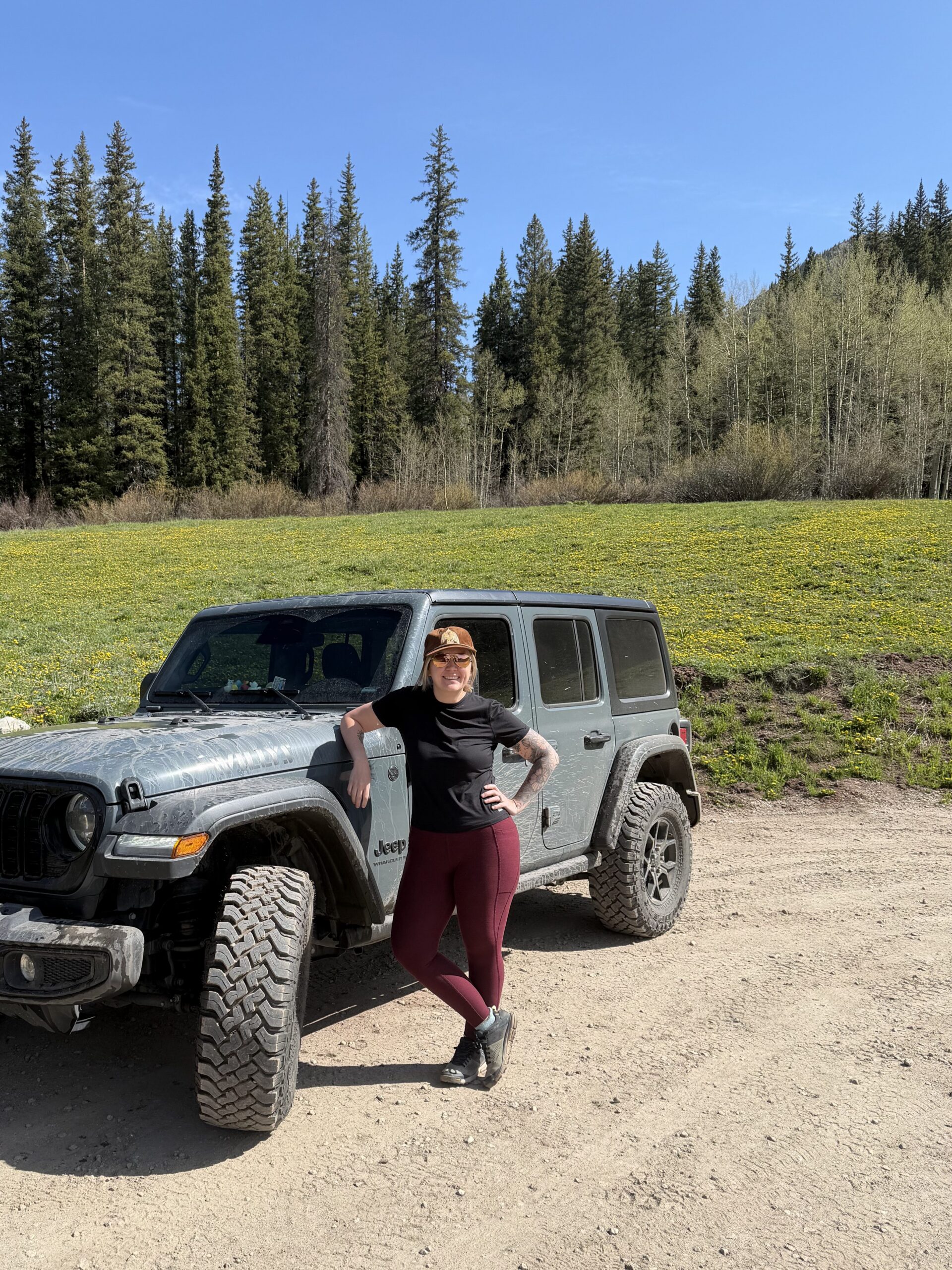
For many couples—especially those who have never driven off-road—riding with me is the easiest option.
Why couples choose it
- I have personally scouted the route and know what to expect.
- You do not have to navigate an unfamiliar mountain road.
- You are not operating an unfamiliar rental vehicle in wedding-day conditions.
- We stay together instead of trying to follow one another with unreliable service.
- I can build stops and backup locations into the day based on your comfort level.
- I carry practical supplies that out-of-state couples may not know they need.
I do my own location scouting, and I will not recommend taking you somewhere I have not personally evaluated for this kind of experience. I am also transparent about my driving skill. There are trails I am comfortable driving and trails that still scare the shit out of me. If a route is beyond my skill set, I am not gambling with your safety for a photograph. Hard pass.
My goal is not to find the wildest road I can technically get through. It is to find the right balance between incredible scenery and a ride you will actually enjoy.
What I keep in the Jeep
My preparedness is part photographer, part Colorado local, and part mom. Depending on the trip, I bring items such as:
- Cold water and electrolytes
- Snacks
- Clear umbrellas and rain protection
- Blankets and layers
- Sunscreen, bug spray, and tick spray
- Baby wipes and towels
- A small wedding emergency kit
- Basic over-the-counter medication
- A changing tent
- Offline navigation and emergency communication
- Basic recovery and safety gear
You will still receive a personalized packing list, but I like having the easy-to-forget things covered.
The limitations
My Jeep works best for the couple and me. Space is limited once my camera gear, water, emergency supplies, and everything else are packed. It is usually not the right transportation for a group of guests.
You also have less private time between stops because we are together for most of the experience. I love spending that time with my couples, but I am not offended if you want space to yourselves. In that case, driving your own vehicle or using a separate arrangement may fit better.
And when I am driving, I cannot photograph the ride itself. I can document our stops and the adventure around them, but not every candid moment happening inside the moving Jeep.
Option 2: Hire a Professional Jeep Tour Company

For more technical roads, larger groups, or couples who want the drive fully documented, hiring a professional Jeep company can be worth every penny.
Why it can be the best choice
- An experienced local driver handles the road.
- The company knows its terrain and monitors local conditions.
- You can relax and take in the view.
- I can photograph the experience instead of concentrating on driving.
- Professional tours can access routes I would not attempt independently.
- Some companies can accommodate family in larger vehicles with multiple rows.
- Private or custom wedding tours may be available.
The San Juans have professional drivers who travel these roads constantly. Watching someone calmly handle terrain that would leave me white-knuckling is impressive—and being a passenger means I can document the wind, laughter, nerves, and whole ridiculous, beautiful ride.
What to consider
A private Jeep experience adds cost, particularly if you need several vehicles, more guests, a custom route, or a very specific time. I understand that every couple has a budget. I also believe that if this is the experience you truly want, it is worth looking at the full value rather than dismissing it as “just transportation.” It is transportation, an activity, access, local expertise, and a huge part of your wedding-day story rolled into one.
There may be less flexibility around timing and spontaneous stops because we are working within another company’s schedule, safety policies, and route. A tour may feel slightly less private because another vendor joins us. Peak-season availability can also disappear quickly, so this is not something to book at the last second.
Before hiring a company, we will talk through:
- Private versus public tour options
- Vehicle type, seating, seatbelts, and weather coverage
- Guest transportation
- Route and difficulty
- Ceremony or portrait stops
- Photography policies
- Tour length and timing
- Cancellation and weather policies
- What happens if a vehicle or road becomes unavailable
Option 3: Rent an Off-Road-Capable Vehicle and Drive Yourselves
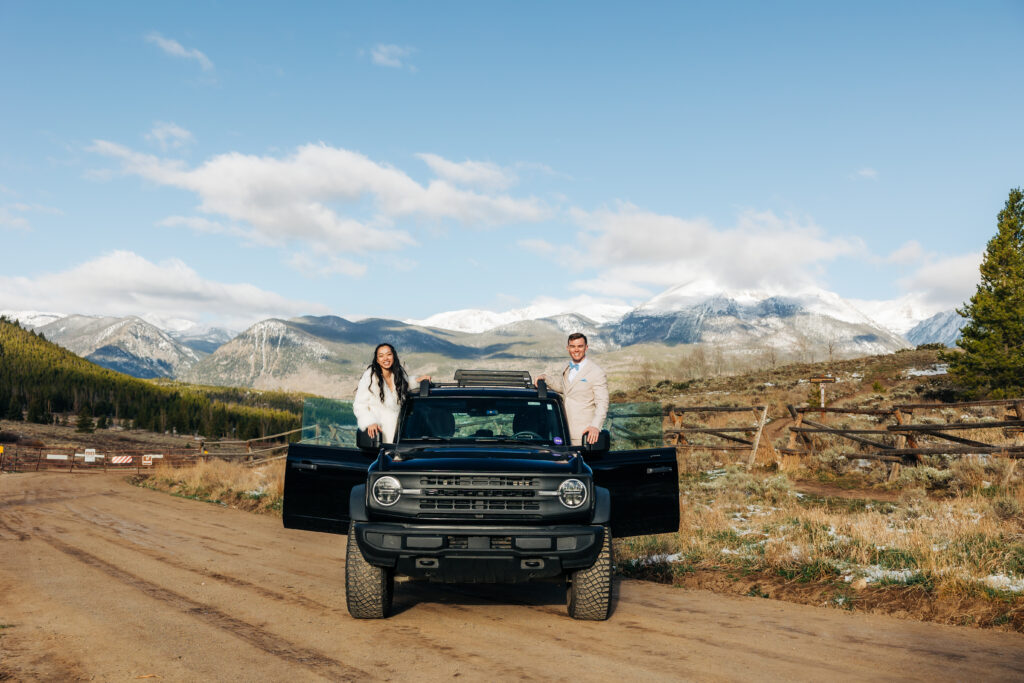
This option provides the most independence and privacy, but it is best for couples with real off-road experience.
A Jeep does not magically make its driver experienced. Four-wheel drive is a tool, not a personality upgrade.
Your wedding day is not the ideal time to learn how you react to loose rock, shelf roads, water crossings, tight switchbacks, or an unfamiliar vehicle. If you regularly off-road at home and are comfortable navigating new terrain, renting may be a great fit. If this would be your first time, choose an easier practice route during the trip and use me or a professional driver for the elopement itself.
Advantages of renting
- More privacy between locations
- More independence over stops and timing
- The vehicle becomes part of the entire Colorado trip
- Freedom to explore before and after the elopement
- The option for me to ride with you or follow separately
Questions to answer before you reserve anything
- Does the rental agreement explicitly allow off-road or designated 4×4-trail use?
- Is the specific vehicle properly equipped for the planned route?
- Does it have suitable clearance, tires, and a full-size spare?
- What insurance applies if the vehicle is damaged off pavement?
- What recovery gear is provided?
- What is the company’s breakdown or recovery process?
- Are you genuinely comfortable driving unfamiliar exposed roads?
- Will you have enough fuel for the entire route and a safety margin?
- Are any permits or registrations required for the exact trail and vehicle?
Do not assume every rental Jeep is trail-ready. A vehicle can look adventurous in the airport parking lot and still have the wrong tires, insufficient clearance, or a contract that prohibits the route you planned.
What Colorado Off-Road Roads Are Actually Like
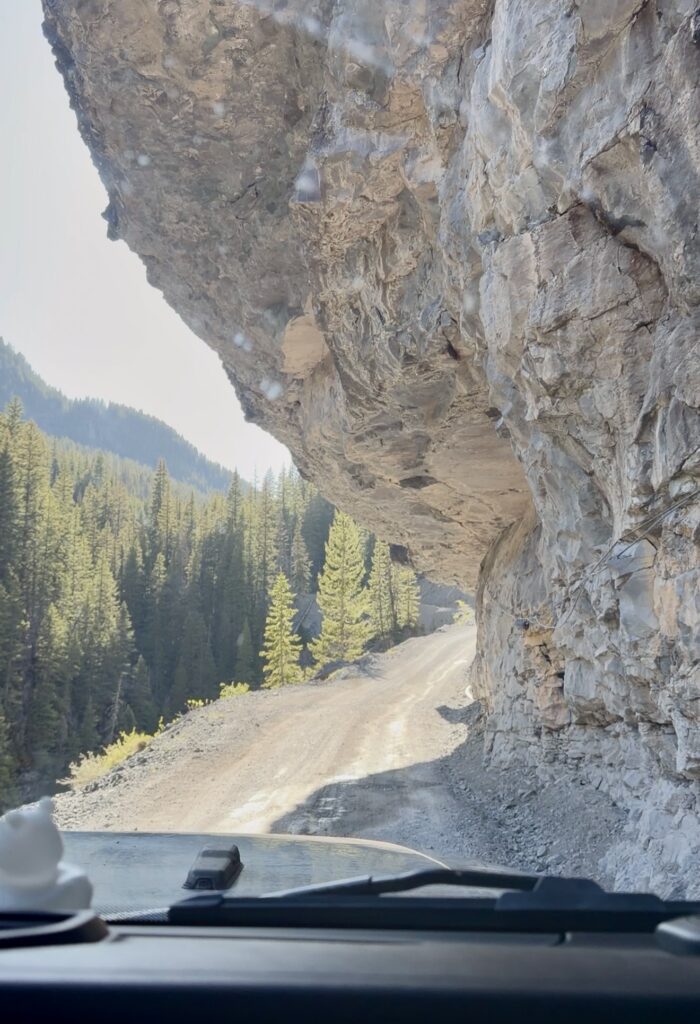
“Only eight miles” can mean more than an hour on a mountain road. Google Maps mileage does not tell you about rocks, switchbacks, washouts, ledges, oncoming traffic, or stopping to let another vehicle pass.
Expect some combination of:
- Slow travel
- Repeated bumps and rocking
- Dust, dirt, mud, or water
- Narrow roads and exposed drop-offs
- Loose rock and uneven surfaces
- Limited safe pull-offs
- Sudden weather changes
- No bathrooms
- No cell service
- Other Jeeps, ATVs, hikers, cyclists, horses, or tour vehicles
Road conditions can change between scouting and the elopement because of snow, rain, erosion, rockfall, closures, maintenance, wildfire, or heavy traffic. In the San Juans, high-country roads are opened seasonally; Ouray County says crews begin clearing snow and debris in May and aim to open several major routes by July 4, but opening dates are never a promise. Current county and land-manager updates always beat an old blog post—including this one. For current openings and conditions, check Ouray County’s high-country road information before heading out.
The Unglamorous Truth About a Jeep Elopement
I want you to love the entire experience, not feel tricked by a highlight reel. Here is what you should realistically expect.
Your hair may get messy
Wind, open-air vehicles, weather, and bouncing down a road are not exactly a climate-controlled salon. I recommend hair and makeup artists who understand outdoor elopements and can create something durable, but perfection is not the goal. You should still feel like yourself after the wind gets involved.
Your clothes will probably get dirty
Dust and dirt come with the territory. Your dress may drag, your suit may wrinkle, and your shoes will get dirty. Frankly, that is true of most Colorado elopements—even without a Jeep.
Wear comfortable boots or hiking shoes with traction. Heels and slippery dress shoes do not make sense on loose, uneven mountain terrain. That is not me being dramatic. Ankles are useful.
If you do not want to ride in wedding clothes, we can travel in casual layers and use my changing tent at the first appropriate stop.
The ride may feel rougher than expected
Motion sickness, altitude, anxiety around heights, and exposed roads can turn a fun idea into a miserable afternoon. Be honest with yourselves. Watch trail videos, ask the tour company for realistic footage, and tell me what makes you nervous before the day.
If the view sounds amazing but every part of reaching it sounds terrible, we should pick a different location. Colorado has plenty of incredible scenery that does not require you to white-knuckle your vows.
Bathrooms are limited—or nonexistent
Use a real restroom before heading up. Once we are in the backcountry, “bathroom” may mean finding privacy and popping a squat. If that is an absolute no for you or a guest, we need to plan the route accordingly.
Cell service may disappear
I personally love the forced disconnection. It helps you get the hell out of Dodge and be present together. But it changes how we coordinate guests and respond to problems.
I download routes for offline use and carry a Garmin satellite communicator for emergencies. We establish meeting places and times before separating because “just text us when you get there” is not a plan when nobody has service.
Plans can change quickly
At high elevation, a warm sunny afternoon can turn cold, windy, and wet fast. A storm may mean adjusting the timeline, changing the route, dropping to a lower elevation, or leaving immediately.
Safety is the priority. Not the original timeline. Not the location saved on Pinterest. Not “anything for the shot.”
I build backup locations into your plan so a closed road or storm does not leave us completely out of luck. Flexibility is not a cute bonus in the mountains; it is part of a smart elopement plan.
Altitude, Weather, and Timing
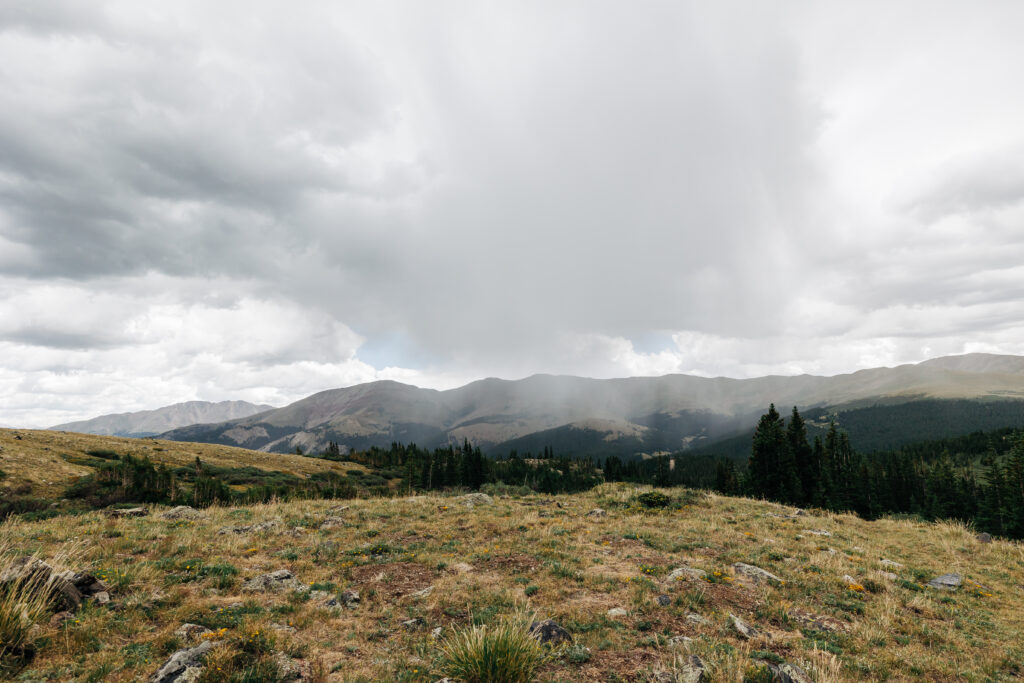
Many off-road routes climb quickly to elevations that can affect even healthy, active people. Arrive in Colorado two or three days before your elopement when possible so your body has time to adjust. Hydrate, use electrolytes, eat enough, sleep, and do not treat the first day at altitude like an audition for an outdoor brand commercial.
Tell me if you develop a headache, nausea, dizziness, unusual fatigue, confusion, or worsening symptoms. We can slow down or move lower. A mountain is not worth pretending you feel fine.
Weather also controls timing. Summer afternoons can bring fast-moving storms, while shoulder-season snow can close roads earlier or later than expected. Temperatures drop dramatically with elevation and after sunset. We may adjust the route or begin earlier based on current conditions and the advice of local road crews or tour operators.
This is why a realistic off-road timeline includes:
- Extra driving time
- Buffer time for passing and pull-offs
- Restroom stops before the trail
- Time to acclimate and eat
- Weather flexibility
- A lower-elevation alternative
- A clear turnaround time
Trying to cram an off-road experience into a traditional minute-by-minute wedding schedule defeats the point.
Before traveling between mountain towns, check current highway closures and conditions through COtrip. This is super helpful not just for off-roading!
What to Pack for an Off-Roading Elopement
You will receive a customized packing list, but this is the starting point.
Clothing and weather
- Warm layers, even in summer
- Rain jacket or poncho
- Comfortable boots or hiking shoes with traction
- Extra socks
- Sunglasses
- Sunscreen and lip protection
- Extra hairpins and touch-up supplies
- Casual travel clothes if changing at the destination
- A dry change of clothes when the forecast calls for real weather
Food, water, and altitude
- More water than you think you need
- Electrolytes
- Easy, filling snacks
- Any personal medication
- Motion-sickness medication if you know you need it
Wedding-day items
- Vow books
- Marriage license and pen
- Rings
- Bouquet or florals secured for a bumpy ride
- Any keepsakes or ceremony items
- One closable bag that keeps everything from flying around the vehicle
Practical extras
- Baby wipes
- Small towel
- Trash bag
- Portable charger
- Offline copies of essential directions and contacts
- Guest instructions downloaded or printed in advance
If you are driving yourselves, you also need appropriate fuel, a suitable spare tire, recovery gear, a route downloaded offline, and a clear understanding of the vehicle and rental company’s recovery process.
Can You Include Guests in an Off-Roading Elopement?
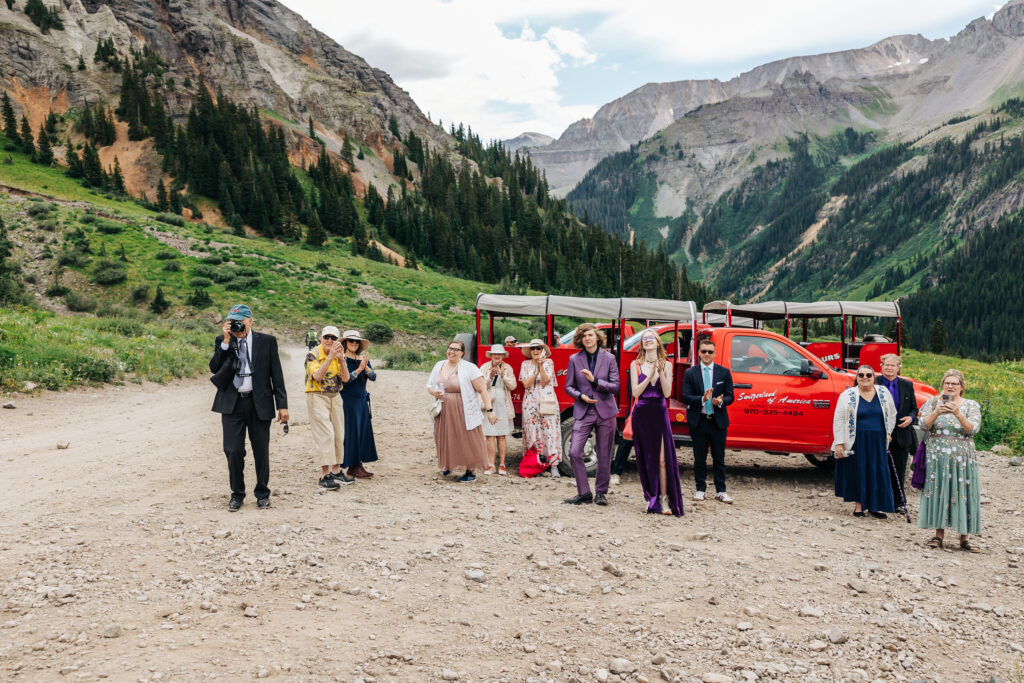
Yes—but guest logistics can completely change the plan.
My Jeep is generally an option for the couple, not a family convoy. If you want guests at a remote ceremony, a professional tour company may be able to transport the group in larger vehicles. Another option is to keep the off-road portion private, then meet family at a more accessible location for the ceremony, picnic, champagne, or photos.
That second option is often the sweet spot: you get meaningful time alone together and your family still gets to participate.
Before involving guests, consider:
- Mobility and ability to climb into the vehicle
- Motion sickness
- Fear of heights
- Medical conditions and altitude
- Bathroom needs
- Child safety and appropriate restraints
- Weather exposure
- The group’s ability to follow instructions and adapt
- Vehicle capacity, seatbelts, and insurance
- Whether everyone actually wants this experience
Do not pressure Grandma into a shelf-road adventure because the ceremony view is pretty. We can create a day that includes the people you love without making them miserable.
Responsible Trail Use and Leave No Trace
The goal is to enjoy these places without loving them to death.
- Stay on designated roads and legal routes.
- Never drive around a gate or closure.
- Do not create a new pull-off or widen an existing road.
- Keep vehicles off fragile alpine tundra and vegetation.
- Pack out everything you bring.
- Respect private property.
- Follow posted vehicle-width and use restrictions.
- Yield to non-motorized users and horses; turn off the engine for horses and wait for the rider’s direction.
- When two motorized vehicles meet on a narrow grade, uphill traffic generally has the right of way; communicate and use an existing safe space to pass without leaving the trail.
- Slow down around people, wildlife, blind corners, camps, and other vehicles.
For more information before heading out, review these Colorado trail tips and off-road etiquette guidelines from Stay the Trail Colorado.
Rules vary by county, land manager, route, and vehicle. A road appearing on an app does not prove it is open, legal, or appropriate. Colorado Parks and Wildlife currently requires an OHV permit for plated vehicles used recreationally on designated OHV trails or open areas on public lands. That does not mean every dirt county road requires one, so verify the classification and current requirements for the exact route instead of guessing.
Useful planning resources include the current county road department, the managing Forest Service or BLM office, Colorado Parks and Wildlife, Motor Vehicle Use Maps, and Stay the Trail Colorado. The Stay the Trail interactive OHV map can help identify designated Colorado routes and current trail information.
The Best Places for an Off-Roading Elopement in Colorado
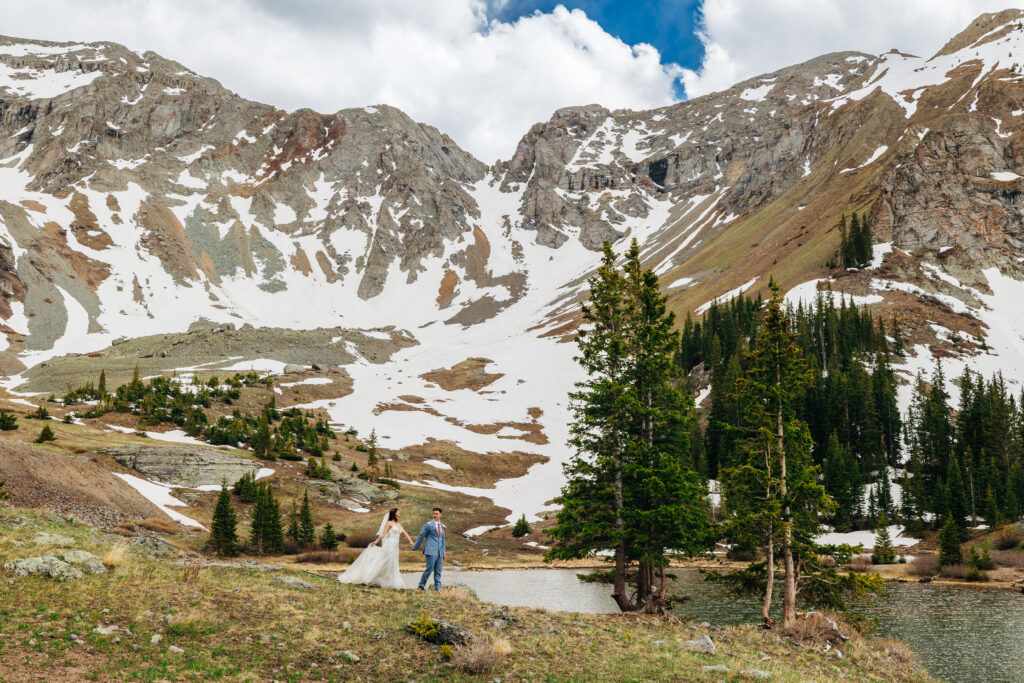
I do not publish every exact location or route online. Some places cannot handle being geotagged into oblivion, and the correct trail depends on your vehicle, experience, season, guests, weather, and desired difficulty. But these are my favorite regions to start the conversation.
Ouray, Telluride, and Silverton: the San Juan Mountains
If off-roading is one of your top priorities, the San Juans are hard to beat. This part of Colorado is known for its historic mountain roads, professional Jeep outfitters, enormous alpine views, wildflowers, mining-country history, rugged peaks, and red mountain terrain.
There are routes ranging from relatively approachable to genuinely technical. Some are within my personal driving comfort zone; others are far better handled by an experienced local tour driver. That distinction matters, and I will be honest with you about it.
This region works especially well for couples who want:
- A rugged, dramatic mountain backdrop
- A full Jeep-centered experience
- Professional tour options
- Alpine lakes and high basins
- Wildflowers in season
- Multiple locations across a longer elopement day
- A private adventure followed by a family ceremony or picnic
Seasonal access is a major consideration. Some high-country roads may not open until early July, and snow or weather can change that in either direction. We confirm current conditions close to the elopement rather than treating a historical opening date as a guarantee.
Crested Butte
Crested Butte is one of my favorite choices for couples who want the fun of off-roading without starting with the most extreme version possible. It has beautiful backroads, wildflowers, mountain views, aspen areas, and routes that can feel adventurous while remaining more approachable for the right capable vehicle and driver.
That does not mean every Crested Butte road is easy. You can still expect dust, rocks, bumps, drop-offs, weather, and changing conditions. But it offers some wonderful options for couples riding with me or experienced couples renting a capable vehicle.
A Real Crested Butte Off-Road Elopement
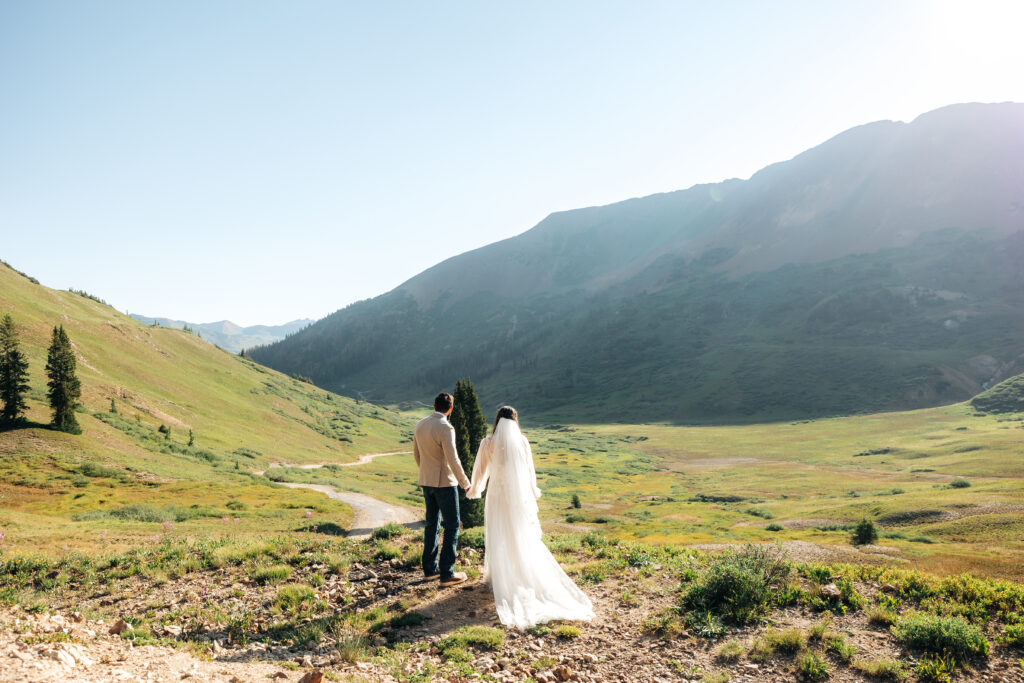
I recently drove a couple on a Crested Butte elopement day. The route was not extreme, and that was exactly why it worked.
I had scouted the day before, including a few areas I had not used previously, and chose places I felt confident would fit them. Both of them experienced some altitude symptoms, so I was incredibly glad I had not built the day around a strenuous hike or an aggressive trail.
We drove slowly, stopped at places that caught their attention, explored the spots I had planned, and watched the landscape unfold around us. They were in awe during the drive and ecstatic afterward. The ride itself became one of the best parts of their day.
It was still dusty. It was still bumpy. There were rocks, people, and some drop-offs. “Not extreme” does not mean paved or polished.
But it fit them. That is the entire point.
The best off-road elopement is not the one with the most terrifying road. It is the one where you get to the end and think, Holy shit, that was badass, because you loved doing it together.
Is an Off-Roading Colorado Elopement Right for You?
Ask yourselves these questions honestly:
- Does the drive itself sound fun, or do you only want the view at the end?
- Are you comfortable with bumps, dust, dirt, and a slow ride?
- How do you feel about heights and exposed roads?
- Would you still enjoy the day if your clothes and vehicle got dirty?
- Are you comfortable with limited bathrooms and no cell service?
- Can you stay flexible if weather or a closure changes the route?
- Do you want a private couple-only adventure or to include guests?
- Is everyone attending physically and emotionally comfortable with the route?
- Do you have the experience to drive, or should we use me or a professional?
- Are you willing to choose safety over the original plan?
Off-roading may be a great fit if you want the journey to be part of the story, value privacy and experience over perfection, and can laugh when the day gets dusty.
It may not be the right fit if the drive sounds stressful, exposed roads ruin your ability to enjoy the scenery, you need reliable bathrooms or service, or keeping every detail clean and controlled is important to you.
Neither answer makes you more or less adventurous. The goal is not to manufacture an impressive-looking elopement. It is to create a day that actually feels like you.
Frequently Asked Questions About Colorado Off-Roading Elopements
Do we need off-road driving experience?
Not if you ride with me or hire a professional tour company. If you plan to rent and drive yourselves on a true 4×4 route, I strongly recommend prior off-road experience. Your elopement day should not be your first technical driving lesson.
Is four-wheel drive the same as all-wheel drive?
No. Both can improve traction, but they are not interchangeable, and neither guarantees a vehicle has the clearance, tires, gearing, recovery points, or equipment needed for a specific trail. We match the actual vehicle to the actual route.
Will our clothes get dirty?
Probably. Dust, dirt, wind, and uneven ground are part of an outdoor Colorado elopement. Choose footwear with traction, expect the hem of a dress to pick up the day, and embrace a little grit.
Can we off-road if we do not want to hike?
Absolutely. That is one of the biggest benefits. We may still walk short distances or explore uneven terrain, but you can reach dramatic views without committing to a long hike.
Can our family come?
Sometimes. The best solution may be a professional Jeep company with appropriate group vehicles, or a private adventure for the two of you followed by a family ceremony somewhere accessible. Guest health, mobility, comfort, and vehicle capacity come first.
Are off-road locations completely private?
No location on public land is guaranteed private. Remote routes usually have fewer people, but we may encounter other vehicles, hikers, or tours. Thoughtful timing, flexible stops, and local knowledge help us create as much privacy as possible.
What happens if the road closes or the weather turns?
We change the plan. I build backup locations and lower-elevation options into the day, monitor conditions, and prioritize getting everyone down safely. Flexibility is a required ingredient here, not a failure of planning.
When is Colorado off-road elopement season?
It depends on the route and the year’s snowpack. Many high-elevation San Juan roads are primarily summer through early fall experiences, and some may not open until around early July. Conditions can change quickly, so we verify access with local road departments and land managers close to the date.
Do we need an OHV permit?
Possibly. Colorado currently requires permits for plated vehicles used recreationally on designated OHV trails and open areas on public lands, while other county roads may be classified differently. The vehicle, route, jurisdiction, and use all matter. Confirm current requirements for the exact plan with Colorado Parks and Wildlife and the relevant land manager.
Can our dogs come?
Often, yes, if the specific location permits dogs and the temperature, terrain, vehicle, wildlife, and guest plan are safe for them. Off-roading can make some locations more accessible for dogs than a long hike, but they still need water, secure restraints, breaks, and a plan for hot or exposed conditions.
How I Plan an Off-Road Elopement
You are not hiring me to hand you coordinates and show up with a camera. I help build the whole experience.
That includes:
- Learning what adventure actually means to the two of you
- Recommending locations and routes I have personally evaluated
- Matching the transportation plan to your experience and comfort
- Connecting you with professional Jeep companies when appropriate
- Creating a custom timeline with realistic drive times
- Planning private vows, portraits, meals, family time, and other activities
- Providing packing and “do not forget this” lists
- Watching weather, access, closures, snowpack, and seasonal conditions
- Creating backup plans before we need them
- Bringing practical supplies and emergency communication
- Staying honest about what I will and will not drive
- Photographing the real story—not turning your entire day into one long photoshoot
I want you to be present with each other. I want room for spontaneous pull-offs, laughter, messy hair, snacks, quiet vows, and the moments you never could have scheduled. The photographs matter deeply, but the experience comes first. When the day genuinely feels good, the photographs usually do too.
Ready to Plan Your Colorado Jeep Elopement?
If an off-road elopement sounds like your kind of wedding day, tell me what part excites you—and what part makes you nervous. You do not need to know the perfect trail, rent a vehicle, or figure out whether your family can come before reaching out. That is what planning together is for.
We will choose a route and transportation option that fits your comfort level, build the off-roading into the story of the day, prepare for the unglamorous parts, and keep enough flexibility for Colorado to be Colorado.
The goal is not to come home with a perfectly clean dress.
The goal is to look at each other afterward and say, “Holy shit, that was badass.”
Inquire with Katie Todd Photography about your Colorado elopement → Here


Leave a comment